ABOUT
The Sudsies Standard: Understanding Dry Cleaning
At Sudsies, dry cleaning is much more than simply putting a garment into a machine. It is a specialized cleaning process designed to safely remove soils, oils, and stains from garments that cannot be effectively cleaned with water alone. Certain fabrics, trims, dyes, and garment constructions can be damaged by water, heat, or traditional laundering.
Unlike laundering, which uses water and detergent, dry cleaning uses a cleaning solvent. This solvent gently cleans fabrics while helping garments maintain their original color, texture, shape, and finish.
At Sudsies, dry cleaning is not just “cleaning clothes.” It is:
- Fabric care
- Garment preservation
- Luxury service
- Attention to detail
- Customer trust
Your job is to protect the guest’s garments as if they were your own.
Understanding Dry Cleaning
Watch the shirt move through each step of the dry cleaning process.
Garment Inspection
Every garment is checked for stains, damage, buttons, trims, fabric type, and special care instructions before cleaning begins.
01
Why Do Customers Choose Dry Cleaning?
Dry cleaning is often the safest method for:
- Suits and sport coats
- Silk garments
- Wool garments
- Formal wear
- Designer and couture clothing
- Structured garments with linings and shoulder pads
- Delicate fabrics and trims
These garments can lose their shape, shrink, fade, or become damaged if cleaned improperly with water.
02
The Sudsies Difference
At Sudsies, dry cleaning is not a one-step process. Every garment goes through multiple stages:
- Detailed garment inspection
- Stain identification and pre-spotting
- Professional dry cleaning
- Post-cleaning inspection
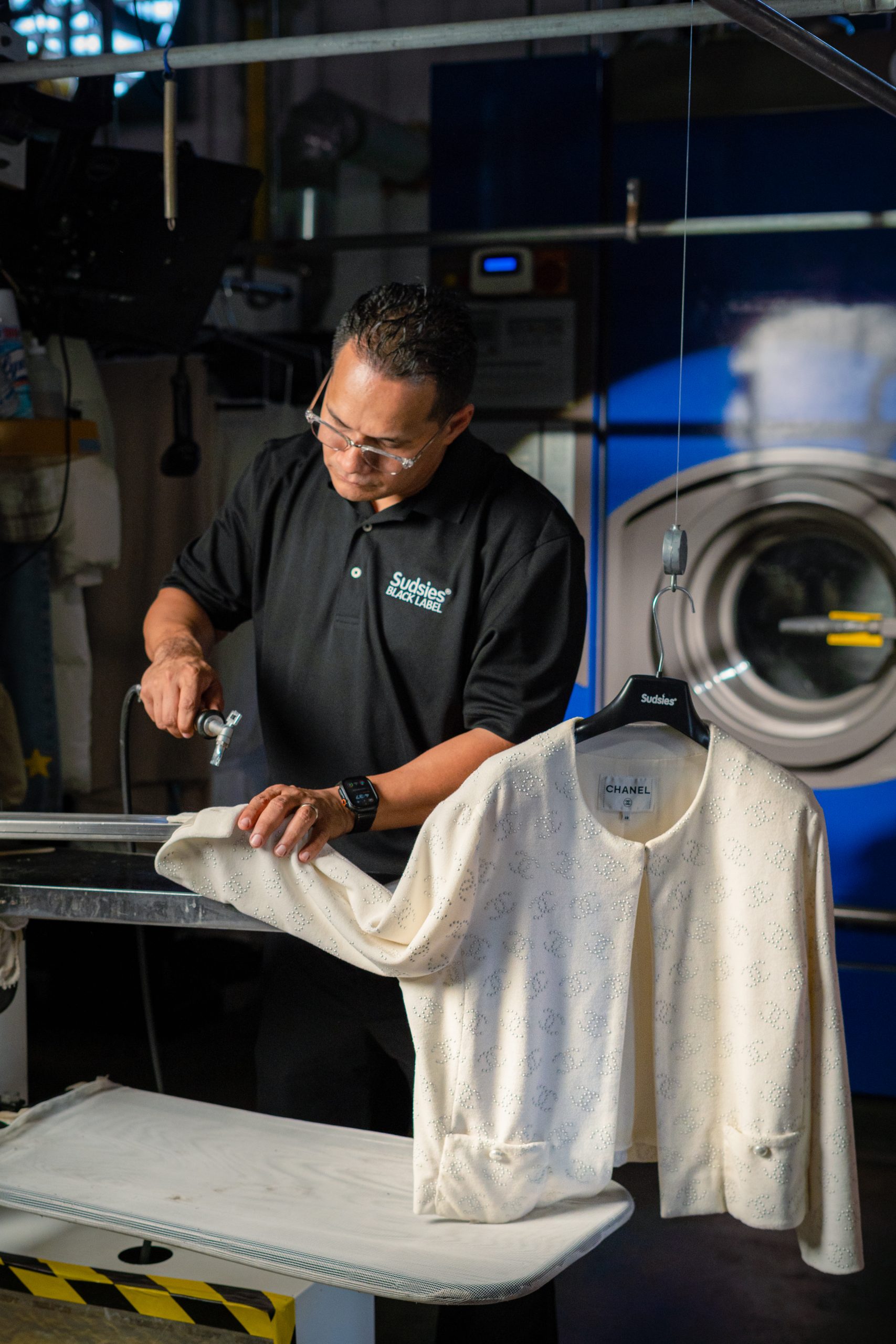
- Expert finishing
- Final quality control
- Packaging and preparation for delivery
Our goal is not only to clean the garment but to restore it to the best possible condition while preserving its life and appearance.
03
Our Brand Philosophy
At Sudsies:
We provide hospitality-level service
We are a luxury garment care company
We focus on quality over speed
We protect designer and sentimental pieces
04
Important Employee Mindset
Every garment belongs to someone who:
- Spent money on it
- Loves it
- Needs it
- Trusts us with it
One mistake can ruin a garment forever.
One great experience can create a loyal guest for years.
05
Common Fabrics Employees Must Know
Cotton
- Durable
- Breathable
- Can shrink if washed improperly
- Common in dress shirts and casual wear
- Natural Fabric
Wool
- Sensitive to heat and agitation
- Can shrink or felt
- Used in suits, sweaters, trousers
Silk
- Very delicate
- Natural Fabric
- Sensitive to water spotting and friction
- Requires careful handling
Linen
- Wrinkles easily
- Can shrink
- Often requires professional pressing
Rayon / Viscose
- Weak when wet
- Can distort shape
- Often safer with dry cleaning
Polyester
- Durable synthetic
- Holds shape well
- Heat sensitive during pressing
Leather & Suede
Never process like standard garments
Specialty cleaning only
06
Basic Stain Categories
Protein Stains – These are biological stains originating from human, animal, or organic matter that contain albumin or other proteins.
Examples:
- Blood
- Sweat
- Milk
- Eggs
These react badly to heat.
Oil-Based Stains – marks caused by lipid-based substances that do not dissolve in water. Common culprits include cooking oils, motor grease, body lotions, and cosmetics.
Examples:
- Grease
- Makeup
- Lotion
- Butter
Usually require solvent treatment.
Tannin Stains – a water-based stain originating from plant matter.
Examples:
- Coffee
- Tea
- Wine
- Juice
Need specialized spotting methods.
Dye Stains – occur when foreign pigments transfer onto a garment, altering its original color.
Examples:
- Ink
- Marker
- Hair dye
Often difficult or impossible to fully remove.
TIP
1. Inspect Before You Clean
Always inspect every garment before processing.
Look for:
- Stains and spots
- Missing buttons
- Loose seams
- Fabric damage
- Items left in pockets
Why: Proper inspection prevents surprises and helps determine the best cleaning method.
TIP
2. Treat Stains as Soon as Possible
The sooner a stain is identified and treated, the better the chance of successful removal.
Remember:
- Fresh stains are easier to remove.
- Different stains require different treatments.
- Never assume all stains will come out during the cleaning cycle.
Why: Pre-spotting is often the key to achieving the best cleaning results.
TIP
3. Quality Control Matters
Cleaning is only part of the process. Every garment should be inspected after cleaning and finishing.
Check for:
- Remaining stains
- Proper pressing
- Missing buttons
- Overall presentation
Why: A perfectly cleaned garment that is poorly finished or inspected can still lead to an unhappy guest.


Here you will learn about the Inspection of the clothes, packaging and racking process. Pay close attention, it is all about the details.
Key Inspection Points – Click the Image below to start the course. Once you click Play, click to enlarge the video at the bottom right corner of the video screen.
Racking Procedures Course – Click the Image below to start the course. Once you click Play, click to enlarge the video at the bottom right corner of the video screen.
Racking Procedure